

Entering a new European market can quickly become a production list: translated pages, articles, a whitepaper and search ads. For a small B2B marketing team, the useful first decision is which customer need deserves that effort. Start by researching local demand and the alternatives buyers encounter, then choose the work your business can credibly deliver.
Start with a focused market question
Choose one product or service, the audience it serves and the market and language you want to investigate. Define the buyer problem you can help solve. That gives research a purpose beyond collecting popular keywords.
If you’re expanding a B2B technology or business services offer, don’t assume your existing messaging already answers local evaluation questions. Investigate how people describe the problem and what they need to understand before considering a supplier. Translation can carry your explanation into another language; research helps you decide which explanation is needed.
Research demand and visible alternatives
Awesome Crew AI’s research workflow explores buyer questions and relevant search terms within selected markets and languages. It combines demand data with observations of your website and selected competitors in inspected search results and sampled AI answers.
Use that picture to identify questions worth answering and examine the alternatives appearing around them. What do those pages explain? Where can your specialists add a useful distinction, practical detail or evidence?
This is a focused view of the results inspected, not a complete map of local competitors. Its value is in making the next decision more specific: which audience need matters to your offer, and how well is it already served?
Choose the response, not a format quota
The opportunity agent assesses the research alongside existing content, planned work and your business priorities. It weighs expertise, differentiation and evidence, then recommends content or search-ad work, explaining its reasoning and confidence in each proposal. Your team gets proposals to assess rather than another blank content calendar.
Match the response to the obstacle:
- Article: answer a focused buyer question.
- Whitepaper: help buyers evaluate a complex decision in depth, drawing on your specialists’ knowledge and supporting evidence.
- Landing page: explain a specific offer and whether it fits the buyer’s needs; improve an existing page if that is where the answer belongs.
- Search campaign: help a relevant audience reach a suitable page when the evidence supports a paid approach.
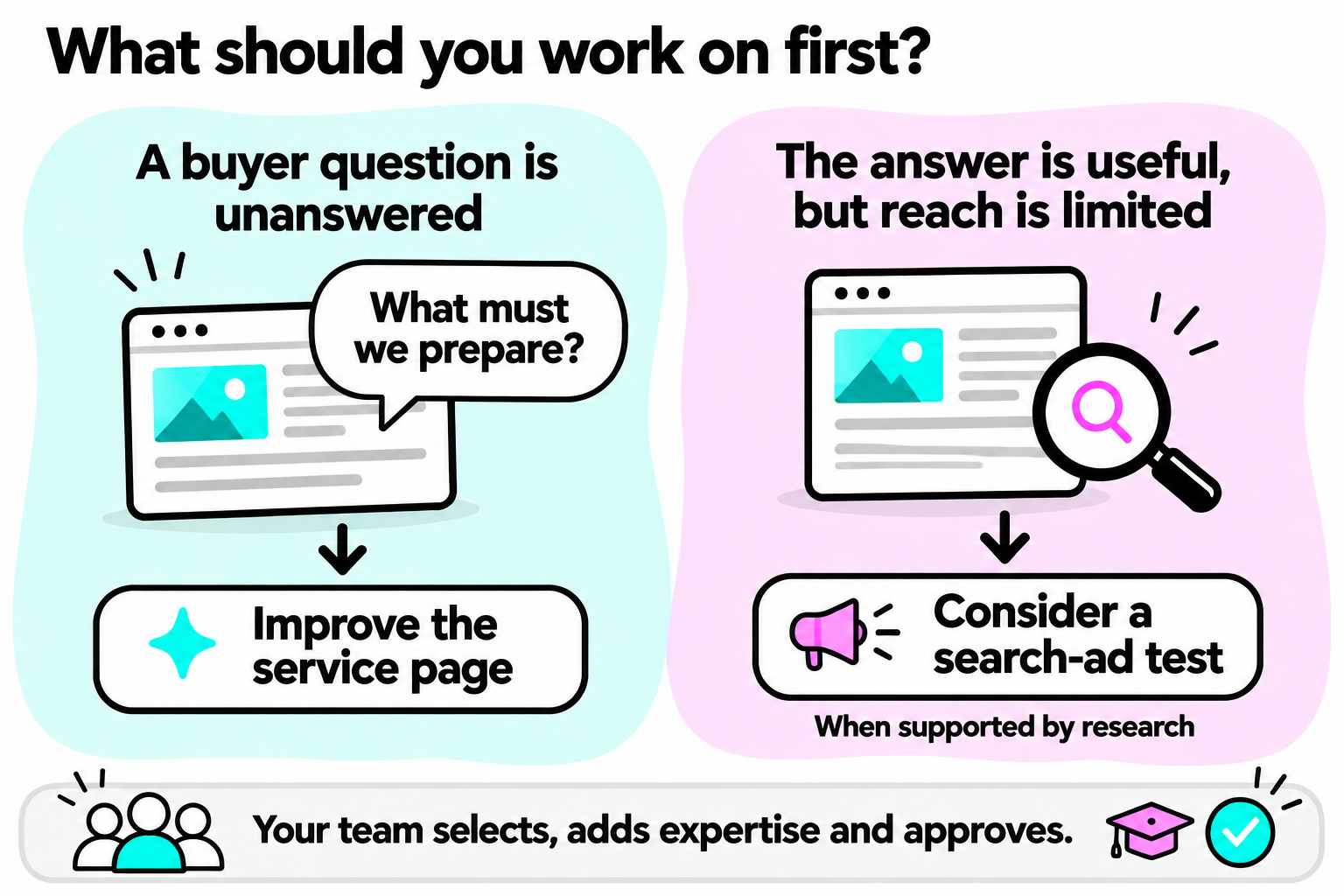
For an illustrative example, imagine a consultancy entering a new market. Its service page explains delivery, but buyers need to understand what they must prepare. A targeted page improvement could answer that question more directly than a broad new whitepaper. If the explanation is already strong but relevant buyers are not reaching it, a supported search-ad test may be the more useful next step.
Focus your specialists’ time
Your team selects and plans the opportunities. Awesome Crew AI then creates or improves the chosen content and search campaigns, carrying the audience questions and evidence into production.
Use specialist time for the parts only your business can supply: practical trade-offs, examples, substantiated claims and judgments about fit. The agents handle research and production; your people steer the work, review revisions and approve what is ready. That is a more focused request than asking a busy expert to write everything from scratch.
Let new evidence change the plan
After publication, revisit observed visibility and engagement, such as search impressions and clicks. When connected and available, search and advertising performance data can inform later opportunity assessments.
A page already attracting relevant searches may need a focused improvement rather than another article on the same question. Advertising reports may give you reason to reconsider a campaign, but they do not prove that a particular page or keyword caused an outcome. Reported conversions are not automatically qualified enquiries.
Build your next-market plan around supported decisions, not a bigger publishing list. Book a demo and bring one product, service or customer question to explore with Awesome Crew AI.